Middle East Tensions Escalate as Trump Warns of War Until Iran’s Military and Leadership Collapse
Critics
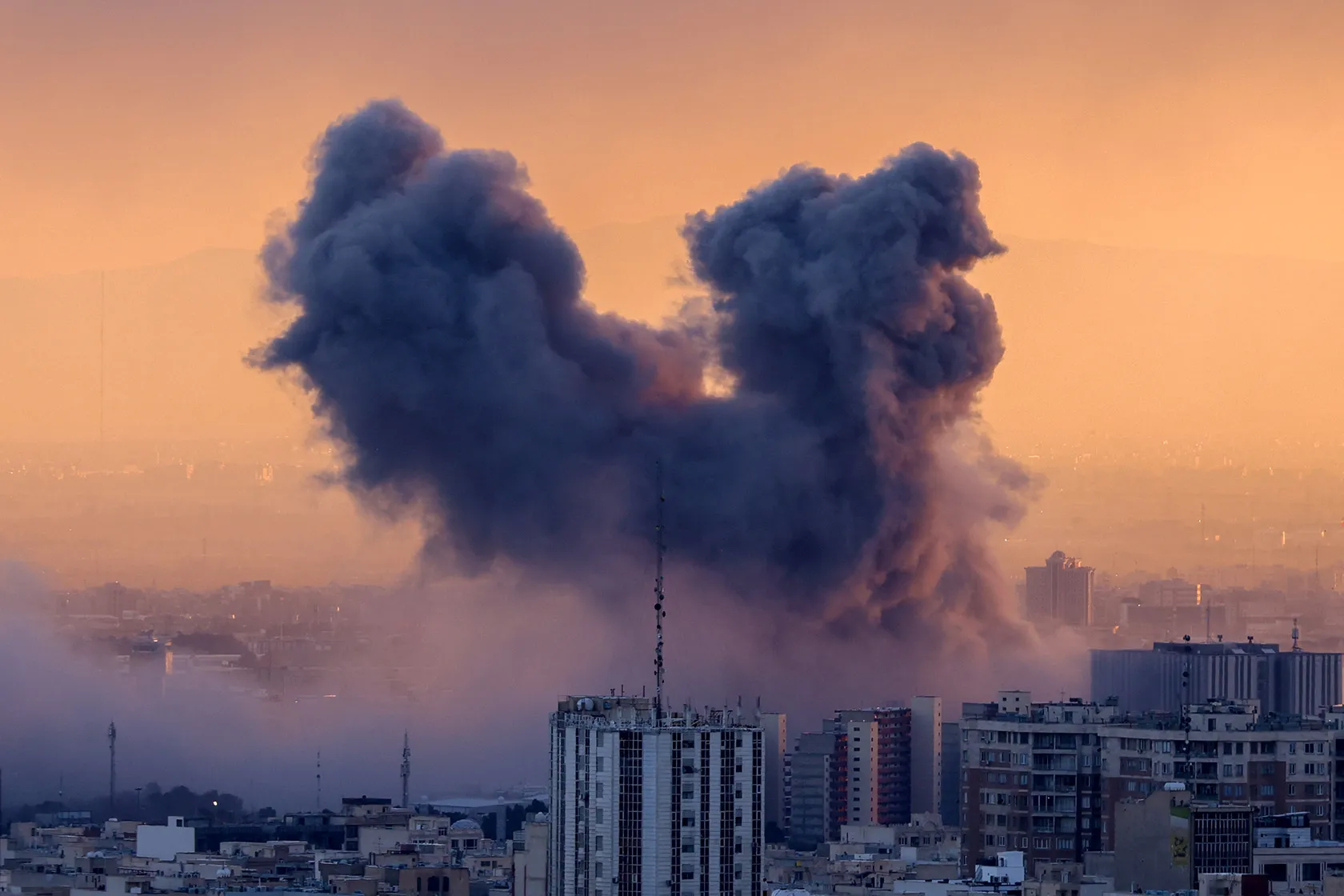
The conflict in the Middle East has intensified following provocative warnings issued by Donald Trump on Saturday, declaring that the war against Iran would only end when the country is left without a functioning military or governing leadership.
Speaking to reporters aboard Air Force One, Trump stated that there is currently no purpose in engaging in negotiations with Iran. He suggested that diplomacy would become irrelevant once Iran’s leadership is neutralized and its military dismantled.
“I do not believe there will be anyone left in Iran even to utter the words ‘we surrender,’” Trump remarked.
The comments come as the regional conflict enters its second week, following a series of major military exchanges between Israel and Iran. At the same time, signs of tension have emerged within the Iranian leadership after President Masoud Pezeshkian issued an apology to neighboring countries affected by Iran’s actions . A move that has drawn criticism from hardliners within his government.
“I personally apologize to the neighboring countries affected by Iran’s actions,” Pezeshkian said, while urging those nations not to assist in U.S -Israeli strikes against Iran.
He also dismissed Trump’s demand for unconditional surrender as a “mirage,” but noted that Iran’s provisional leadership council had agreed to halt strikes against neighboring countries if Iran itself is not targeted.
Trump, however, interpreted the apology as a sign of imminent defeat and warned of a “major strike” against Iran on Saturday, signaling the possibility of deeper U.S. military involvement.
Amid reports of internal disagreements in Tehran, Israeli Prime Minister Benjamin Netanyahu stated in a televised interview that members of the Islamic Revolutionary Guard Corps (IRGC) would be spared if they laid down their arms.
However, Ali Larijani, Secretary of Iran’s Supreme National Security Council, dismissed claims of internal divisions, insisting that Iranian officials remain united in their strategic approach to the war.
Despite the president’s conciliatory tone, Gholam-Hossein Mohseni-Ejei, Iran’s Chief of Judiciary and a prominent hardliner on the three-member council currently exercising the Supreme Leader’s powers, alleged that certain regional territories are being used as launchpads for attacks against Iran. He warned that retaliatory measures would continue.
Shortly after Pezeshkian’s announcement, the IRGC claimed it had launched drone strikes targeting a U.S. air combat center at Al Dhafra Air Base. These reports, however, have not been confirmed by official media outlets.
State media also reported that the IRGC targeted an Israeli refinery overnight. While air raid sirens sounded in the Haifa district, no casualties or major damage were reported.
Meanwhile, security sources and news agencies reported rocket fire directed at the United States Embassy Baghdad. Mohammed Shia al-Sudani, the Prime Minister of Iraq, has ordered security forces to apprehend those responsible.
According to Associated Press, one missile struck a helipad inside the embassy compound, though no injuries were reported.